
The School Profile

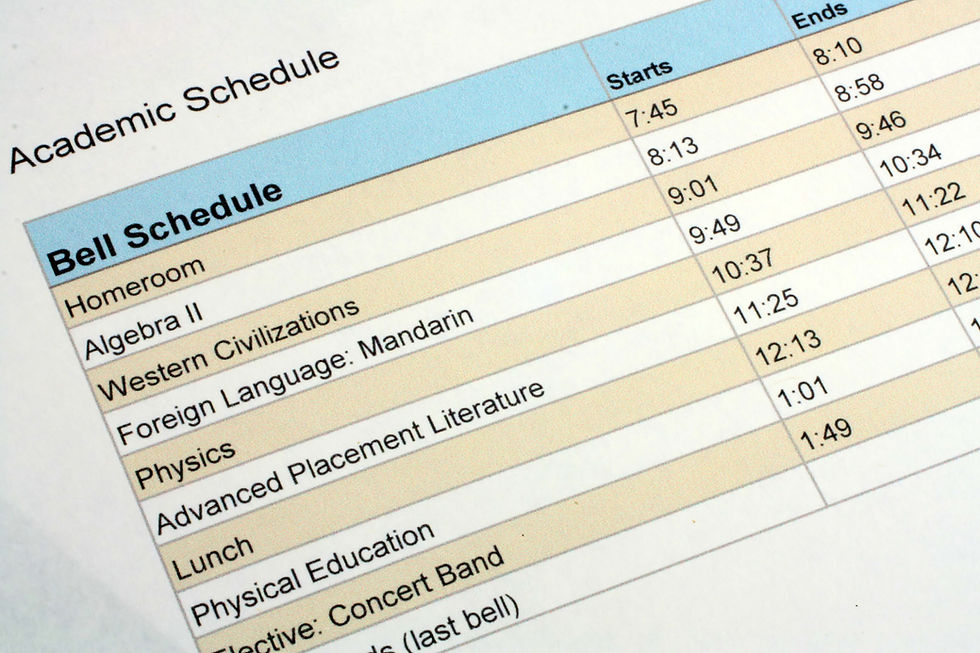
When families think about college applications, they focus on essays, test scores, activities, and transcripts. But there's another document that plays a major role in how colleges understand a student's accomplishments—and most students never even see it.
It’s called the School Profile, and it accompanies every transcript your high school sends to colleges. This one- to two-page document is created and updated each year by the counseling office. Its purpose is simple: to give admissions officers a clear understanding of the high school environment from which a student comes.
Context Matters
Colleges don't evaluate applicants in isolation. They evaluate them in the context of their high school, and the School Profile explains what that context is. Think of it as a lens through which colleges view the transcript.
Without it, admissions officers would have no way to know:
• Whether a high school offers 20 AP classes—or none
• Whether a particular GPA is considered excellent
• Whether a senior class of 60 has different leadership opportunities than a class of 600
What’s Included in a School Profile?
Most School Profiles include the same core information:
• Basic school details: enrollment numbers, student-to-teacher ratio, and school type
• Curriculum and academic programs: honors, AP, IB, or dual enrollment offerings, and access limitations
• Grading scale and GPA policies: weighted vs. unweighted GPAs and class ranking
• Graduation requirements: so colleges understand required courses
• School community info: available clubs, programs, and where recent grads have enrolled in college
How Colleges Use the School Profile
Colleges rely heavily on this document.
A student who takes two AP classes at a school that offers four is evaluated differently than a student who takes two at a school that offers twenty. The profile shows what “rigorous” means in that specific environment.
It helps admissions officers:
• Determine whether a particular GPA places a student in the top 10% or is average
• Understand whether leadership roles are competitive or limited
• See if certain activities or programs even exist at the school
Leveling the Playing Field
Most importantly, the School Profile helps level the playing field.
Two students from completely different backgrounds should not be judged as though they had identical opportunities. The profile ensures colleges evaluate students on what they did with the resources available to them, not what their school did or didn’t provide.
How to View Your School’s Profile
Students don’t submit or interact with the School Profile at all. Counselors send it automatically alongside transcripts.
If you’re curious, you can often find your school’s profile by searching your high school’s name along with “school profile.”
Colleges use this document to understand the academic landscape you’re learning in and to evaluate your choices within that context.
What matters most:
• How you challenged yourself
• How you made the most of your environment
• How you grew within your capabilities
Admissions officers are looking for students who have pushed themselves given their unique school setting.
Garrett Educational Consulting provides comprehensive counseling for college and boarding school admissions as well as academic advisement. Click HERE to learn about our services.
Prepared especially for our clients and their families The information included in this newsletter is generic and assumes no liability for loss or damage due to reliance on the material contained herein. Copyright © 2025 by The College Advisor, Inc. All rights reserved.


Mình có lần lướt đọc mấy trao đổi trên mạng شيخ روحاني thì thấy nhắc nên cũng tò mò mở ra xem thử cho biết. Mình không tìm hiểu sâu جلب الحبيب chỉ xem qua trong thời gian ngắn để quan sát bố cục جلب الحبيب cách sắp xếp شيخ روحاني các mục và trình bày nội شيخ روحاني dung tổng thể. Cảm giác là các phần được trình bày khá gọn, các Berlinintim mục rõ ràng nên đọc lướt cũng không bị rối Berlinintim với mình như شيخ روحاني vậy là đủ để nắm tin cơ bản rồi. جلب الحبيب
👍
I read your school profile post and it helped me see how Garrett Educational Consulting breaks down each step so families can really understand what a great fit looks like for their child. When I was stuck on a school writing task once I even used professional product description writing as something I used to help make my own words clearer so others could follow my ideas better. Your article made me think that clear language makes big decisions feel easier.
I enjoyed reading your post about the school profile because it explains clearly how knowing a school’s strengths and goals can help families and students make better choices. When I was working on a long paper, I once used the best research proposal editing service online as something I had personally used late one night to fix messy parts before turning it in and it helped me understand where I could improve my writing. It reminds me that clear work and careful review make any project stronger.
I liked how this post explains a school profile in simple parts because it made a school feel easier to understand for families and students. I remember when I was nervous about tests and used English communication exam help services practice questions at home to get better at reading and writing before big days. Reading this made me think clear info and good support can make learning feel less scary.